
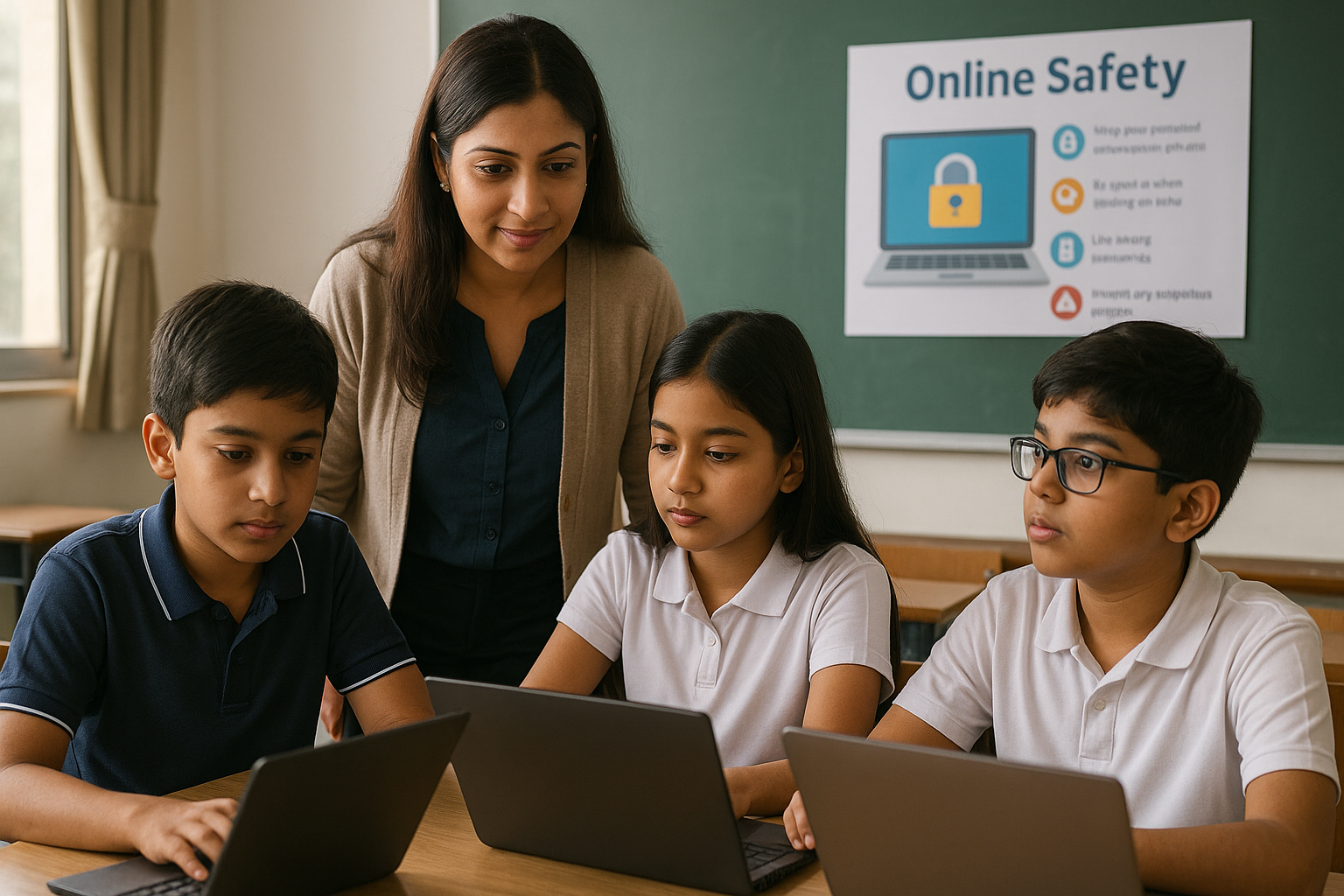
Today’s children are growing up in a world where screens are not optional — they’re essential. From online classes and gaming to social media and instant messaging, kids are spending more time online than ever before. While technology opens doors to endless learning opportunities, it also brings new challenges. That’s why teaching digital responsibility has become just as important as teaching math or science.
1. Why Digital Responsibility Matters
The internet can be a wonderful teacher — but also a dangerous playground. Cyberbullying, data privacy breaches, online scams, and exposure to inappropriate content are growing concerns. Teaching digital responsibility helps children understand both the power and the risks of the online world, preparing them to make thoughtful, safe choices.
2. Start with Awareness, Not Fear
Instead of scaring kids away from technology, parents and teachers should help them understand how it works. Discuss topics like what’s safe to share online, how to spot fake news, and why digital footprints matter. The goal isn’t to restrict — it’s to empower them to navigate the internet confidently and wisely.
3. Setting Boundaries Together
Digital responsibility starts at home. Families should create “tech agreements” — setting clear rules about screen time, appropriate content, and device-free hours. When children participate in setting these boundaries, they are more likely to respect and follow them.
4. Encouraging Critical Thinking
Children should be encouraged to ask questions like:
- “Who created this content?”
- “What is their motive?”
- “Can I verify this information?”
These simple habits help build digital literacy and skepticism, protecting them from misinformation and manipulation.
5. The Role of Schools
Forward-thinking schools are now integrating digital citizenship programs into their curriculum. Through interactive workshops and classroom discussions, students learn about online ethics, cyber safety, and respectful digital communication — lessons that will serve them for life.
6. Modeling the Right Behavior
Children learn most by imitation. Parents and teachers who scroll responsibly, respect others’ privacy, and avoid constant screen time send a stronger message than any lecture could. Practice what you teach — your digital habits are their blueprint.
7. Balancing Screen Time with Real Life
Technology is here to stay, but balance is key. Encourage outdoor play, hobbies, reading, and face-to-face friendships. Kids who experience joy and engagement offline are less likely to over-rely on screens for validation and entertainment.
The Bottom Line
Digital responsibility is not about saying no to technology — it’s about saying yes to smarter, safer use. By teaching children to think before they click, share, or post, we prepare them to become not just digital users, but digital citizens — informed, kind, and aware of the impact of their online actions.
Parent Takeaway
Talk openly about your child’s online world — the games they play, the influencers they follow, and the platforms they use. Be a guide, not a guard. With the right awareness and boundaries, your child can grow up to be both tech-savvy and safe.