

Introduction
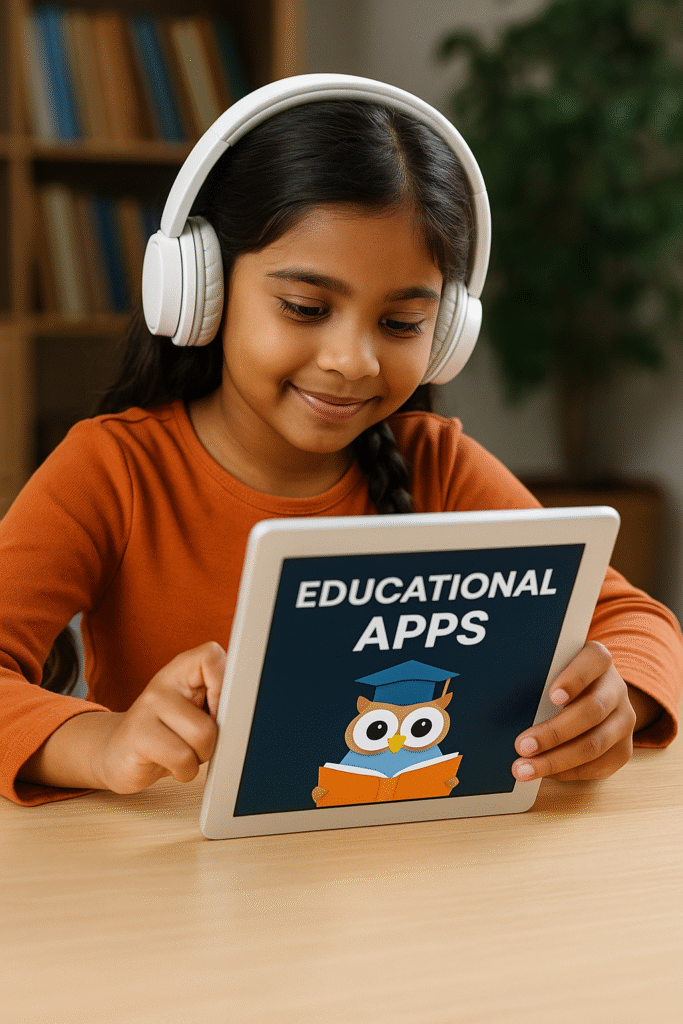
In today’s world, smartphones and tablets aren’t just for games—they’re powerful learning tools too. For parents looking to help their children stay ahead and curious, choosing the right educational app can make all the difference. With hundreds of thousands of apps available, we’ve narrowed down 10 top-rated education apps for kids (and teens) that stand out in 2025 for their quality, safety, and learning outcomes. Whether your child is in primary school or gearing up for competitive exams, these apps deserve a place on your shortlist.
What to look for in a good educational app
Before diving into our list, here are three key criteria you should use when evaluating learning apps:
- Curriculum alignment and adaptability – Does the app follow recognised learning standards (CBSE/ICSE/international) or adapt to your child’s pace?
- Safe and engaging design – Is the environment ad-free (or low ads), age-appropriate, and does it keep your child motivated (via games/quizzes, progress tracking)?
- Parent-friendly features – Can you track your child’s progress, set limits, export reports, and integrate usage with their schoolwork?
The Top 10 Apps (in no particular order)
1. Khan Academy Kids
Designed for young learners (ages 2-8), this free app offers interactive lessons in reading, writing, maths and problem-solving—with no ads or subscriptions. It is especially helpful for early literacy and building a love for learning. learn.khanacademy.org
Why it’s worth trying: Fully free, safe for young children, and created by a trusted nonprofit.
2. BYJU’S – The Learning App
A well-known Indian player for K-12 curriculum and competitive exam prep. BYJU’S offers animated video lessons, quizzes, and adaptive planning. According to a recent list of online learning apps in India, it remains a top choice for school-going children and exam aspirants alike. infowindtech.com
Why it’s worth trying: Strong local (Indian) curriculum focus, good for board exam readiness and school topics.
3. Duolingo
Not just for adults—Duolingo is a fun, gamified way for children to learn languages. It appears in education-app lists for 2025 among the top picks for K12 students. Prime Insights
Why it’s worth trying: Builds language skills in a fun way; useful supplement for English/Hindi/other languages.
4. Kahoot!
Quiz-based learning that many schools and teachers use. Kahoot! turns review sessions into fun competitions, helping reinforce key topics. Listed among essential K12 apps for 2025. Prime Insights
Why it’s worth trying: Excellent for revision, group learning, and motivating children through gamified practise.
5. Quizlet
Built around flashcards and study sets, Quizlet supports self-paced revision, especially useful for older children (classes 9–12). It also features user-generated sets, so you’ll often find local curriculum content. Prime Insights
Why it’s worth trying: Great for revision and memorisation; platform-agnostic (web + mobile).
6. Epic!
A digital library for kids, offering thousands of books, reading quizzes, and progress tracking. It features on “best educational apps” lists as a reading-focused tool. create-learn
Why it’s worth trying: Encourages reading habit; good for independent learning and quiet time.
7. Seesaw
More than a learning app—it’s a classroom-and-home communication platform. Teachers assign, students submit, and parents monitor. Included in K12 app lists for 2025. Prime Insights
Why it’s worth trying: Bridges school and home; helps you stay connected with what your child is doing.
8. ClassDojo
Another classroom-community app: students, teachers and parents interact, behaviour is tracked, and learning moments shared. It appears in top-apps-for-2025 lists. Prime Insights
Why it’s worth trying: Good for younger children where behaviour and routine count a lot.
9. Photomath
While less broad-based than others, Photomath gives step-by-step explanations of maths problems via camera scan. It’s cited among reading/learning apps for children and early teens. Kasiga School – Kasiga School
Why it’s worth trying: Helpful for maths support outside school; builds confidence in problem-solving.
10. Gauthmath
An app referenced in 2025 lists as an AI-powered support tool for mathematics problem-solving (especially for K–12 students in India). Prime Insights
Why it’s worth trying: Indian context, maths support, useful when your child needs help beyond class.
How to use these apps wisely
Here are three tips to make these apps work — not turn into unproductive screen time:
- Set a schedule: Decide “Learning App Time” (e.g., 20 mins after homework) so it doesn’t become casual browsing.
- Combine with offline activity: If your child used Quizlet or Photomath, follow up with real-paper questions or a quick parent-child discussion.
- Monitor & guide: Use the parental dashboards (many of these apps have them) and talk to your child about what they’re learning—this keeps it meaningful.
Conclusion
2025 brings richer, smarter, and more interactive educational apps that go far beyond drill-and-kill styles. For parents, the challenge is choosing wisely—not just download and forget. The ten apps above offer trusted content, varied formats, and tools for both school learning and exploration. Combine them with guidance, schedule, and family discussion, and you’ll turn screen time into meaningful progress.
➡️ Tip: Start with one or two apps that match your child’s age and needs, avoid installing too many at once, and revisit what’s working every 4-6 weeks.