
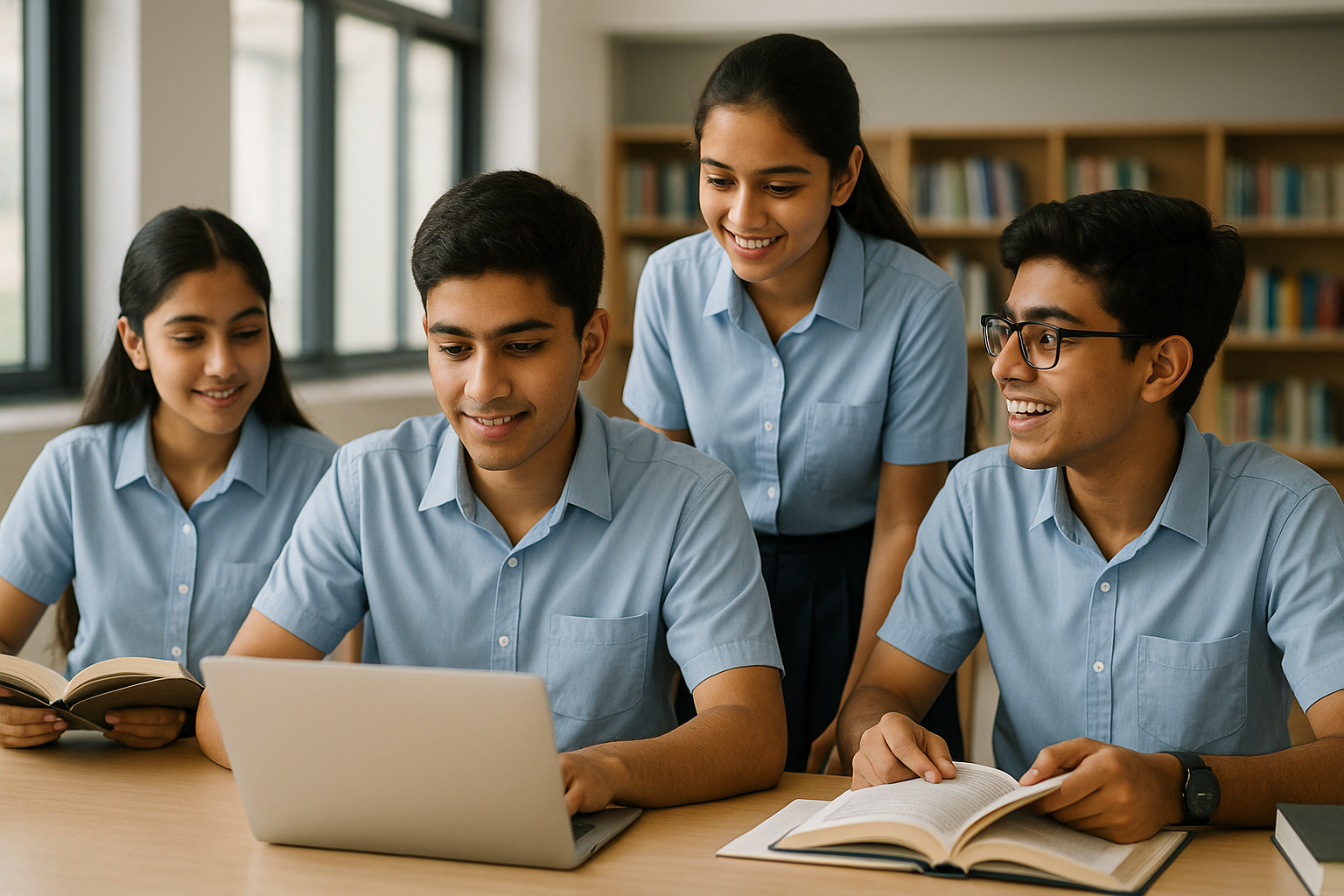
Over the last decade, international schools in India have rapidly grown in number and popularity. Offering global curricula, state-of-the-art infrastructure, and a promise of holistic education, these schools are often seen as the gold standard of modern learning. But what exactly makes them “international,” and what should parents truly know before enrolling their child?
1. What Defines an International School
An international school in India typically follows a global curriculum such as the International Baccalaureate (IB), Cambridge (IGCSE), or International Primary Curriculum (IPC). These programs emphasize inquiry-based learning, creativity, and global awareness — in contrast to rote learning or exam-driven systems.
2. The Teaching Philosophy
Unlike traditional schools that often focus on textbook-based instruction, international schools encourage critical thinking and independent learning. Lessons are designed around real-world problems, discussions, and projects. The aim is to prepare students not just for exams — but for life in a globalized, interconnected world.
3. Teacher Quality and Training
One of the strongest pillars of international schools is their faculty. Teachers are often trained in global pedagogical methods and receive ongoing professional development. Many are expatriates or have international teaching experience, bringing diverse cultural perspectives into the classroom.
4. The Cost Factor
There’s no denying it — international schools come with a premium price tag. Annual fees can range from ₹3 lakh to ₹10 lakh or even higher in metros. Parents should consider this an investment not just in academics, but in exposure, extracurricular development, and life skills that can shape their child’s future.

5. Academic Rigor vs. Flexibility
While global curricula focus on flexibility and conceptual understanding, they are far from easy. Assessments are continuous, and students are expected to think independently, collaborate, and research. For some children transitioning from CBSE or ICSE, this can be a steep learning curve — but also a rewarding one.
6. Infrastructure and Exposure
From well-equipped science and robotics labs to performing arts theatres and sports arenas, international schools provide facilities that rival global institutions. Beyond academics, they encourage global exchange programs, Model UN conferences, and community service projects, giving students a taste of international exposure while staying in India.
7. Parental Involvement and Community
These schools often expect active parent participation — from attending seminars to volunteering in school events. The community tends to be cosmopolitan, with parents from corporate, entrepreneurial, and expatriate backgrounds, making it a culturally rich environment.
8. The Real Value: A Broader Worldview
At their core, international schools prepare students to think globally and act locally. They nurture open-mindedness, respect for diversity, and confidence — qualities that prepare children not only for foreign universities but also for leadership in an increasingly multicultural world.
The Bottom Line
International schools offer immense opportunities — but they’re not the only path to success. The right school is one that fits your child’s personality, pace, and passions, not just your aspirations. Parents should visit, interact, and understand the school’s philosophy before making a choice.
Parent Takeaway
If you’re considering an international school, focus on fit, not just fame. Look for balance — a school that values empathy as much as excellence, and curiosity as much as curriculum. Global education should create global citizens, not just global applicants.