
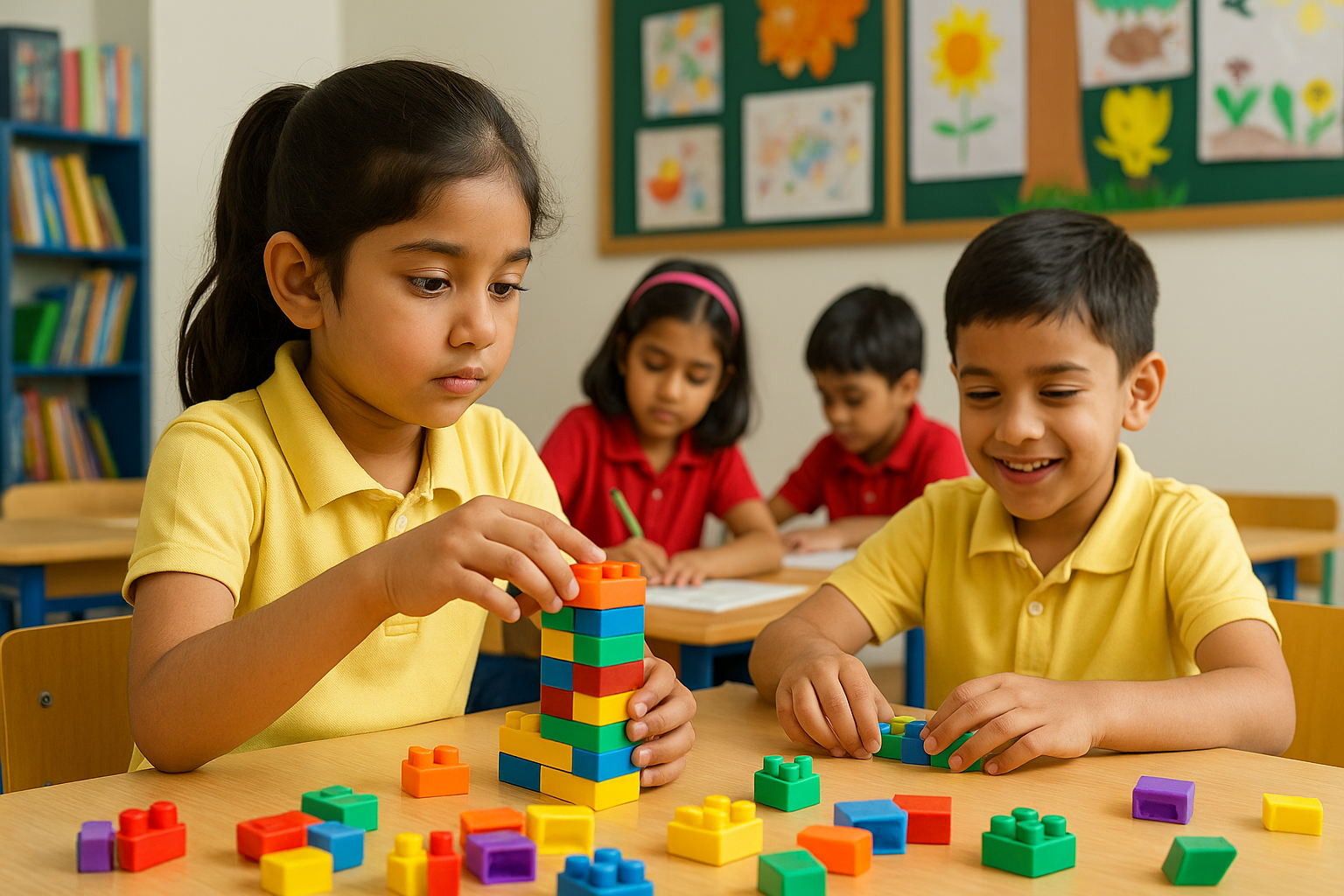
For children, play isn’t just fun — it’s fundamental. Long before formal schooling existed, kids learned about the world through exploration, imagination, and play. Today, neuroscience and education experts agree: play-based learning is one of the most powerful ways to build smarter, more creative, and emotionally balanced children.
1. What Is Play-Based Learning?
Play-based learning goes beyond recess or free playtime. It’s a structured yet flexible approach where children learn through exploration, storytelling, games, and hands-on activities. The focus isn’t on memorizing facts but on discovering how things work — sparking curiosity and intrinsic motivation to learn.
2. The Science Behind It
When children play, their brains release dopamine, a chemical that enhances motivation, creativity, and focus. Play activates multiple areas of the brain, strengthening cognitive, social, and emotional pathways. This not only boosts academic readiness but also helps children retain knowledge longer.
3. Building Core Skills Naturally
Through play, children learn essential life skills:
- Language development through storytelling and role-play
- Problem-solving through puzzles and construction games
- Teamwork and empathy through cooperative play
- Creativity and innovation through imaginative play
Every game becomes a mini-lesson in communication, patience, and resilience.
4. The Emotional Advantage
Children who learn through play are more confident, independent, and emotionally stable. Play helps them process emotions, handle disappointment, and express themselves. It creates a safe space to take risks and learn from mistakes — lessons that go far beyond the classroom.
5. Teachers as Facilitators
In play-based classrooms, teachers act as observers and guides. They design playful environments — storytelling corners, art labs, science tables — that encourage curiosity. Instead of “teaching,” they ask open-ended questions like “What do you think will happen if we try this?” — sparking discovery-driven learning.
6. A Shift in Indian Classrooms
Many progressive Indian preschools and early learning centers are now adopting Montessori, Reggio Emilia, and experiential play-based methods. These approaches replace rote repetition with hands-on learning and creativity, setting a strong foundation for lifelong learning and emotional well-being.
7. Parents’ Role in Play-Based Growth
Parents don’t need fancy toys or apps to support play-based learning. Building blocks, art supplies, or even household objects can inspire imagination. The key is to join the play — listen, encourage, and celebrate curiosity instead of focusing only on results.
The Bottom Line
Play isn’t a break from learning — it is learning. It nurtures smarter minds, stronger hearts, and joyful spirits. When children play, they’re not just passing time; they’re developing the skills they’ll need to thrive in the real world.
Parent Takeaway
Encourage at least an hour of free or guided play every day. Whether it’s outdoor games, storytelling, or creative building — let your child explore, make mistakes, and imagine without boundaries. A playful child today becomes an innovative thinker tomorrow.